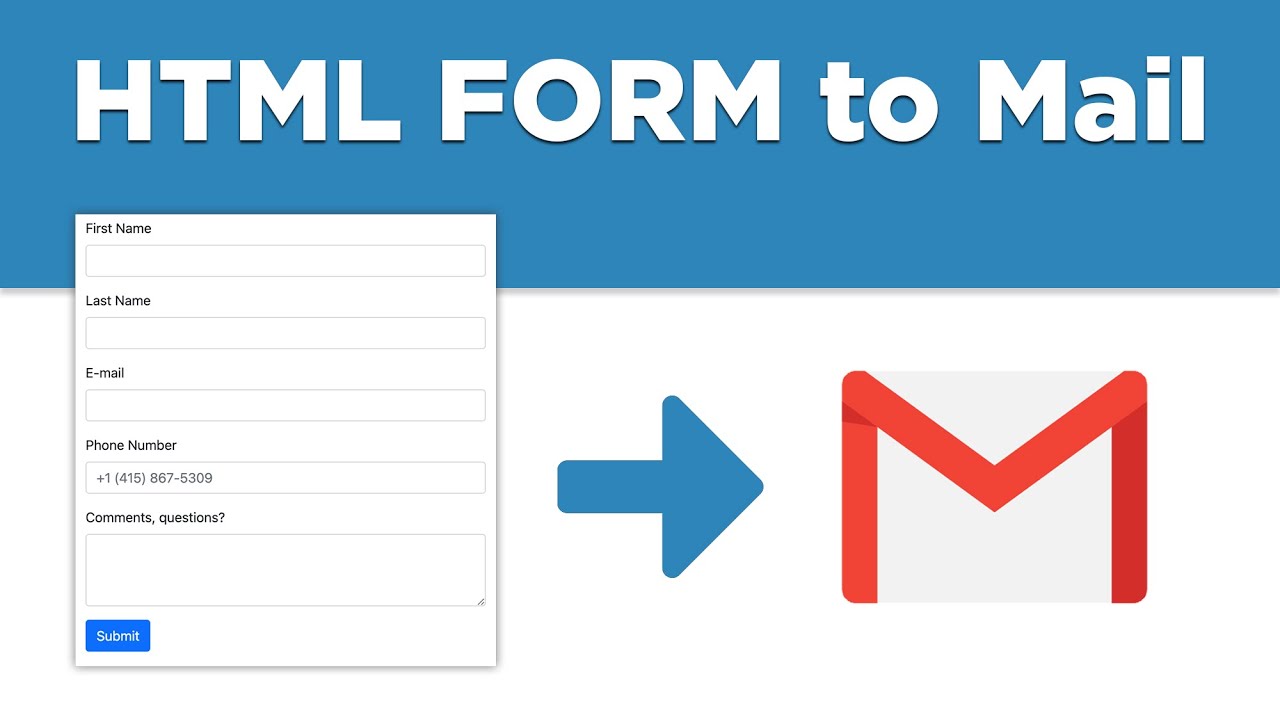
HTML Form to Email: Simplifying Your Website’s User Communication
In today’s digital landscape, seamless communication between a website and its visitors is crucial. Whether it’s collecting feedback, receiving inquiries, or processing registration data, an HTML form to email that sends information directly to email can streamline user interaction. This simple yet powerful tool ensures quick responses and enhances the overall user experience.
Understanding HTML Form to Email
An HTML form to email setup allows data submitted through a website’s form to be sent directly to a designated email address. This process bridges the gap between a user and a website owner without requiring complex backend systems. Users simply fill out fields such as name, email, message, or subject, and upon submission, their details are delivered instantly to an inbox. This method keeps communication direct and efficient.
How It Works
The foundation of an HTML form to email system lies in combining front-end structure with a script that processes submissions. The HTML form defines the input fields and the submission button. When the user clicks submit, the form data is sent to a server-side script that forwards it to an email address. This can be implemented using different programming approaches depending on the hosting environment, ensuring that website owners receive form responses without delay.
Benefits of Using HTML Form to Email
One of the primary benefits is its simplicity. Website owners can manage communication directly from their inbox, eliminating the need for additional dashboards or CRM integrations. It also provides a professional touch to websites, making them interactive and user-friendly. The quick exchange of information helps improve response time, which is vital for customer satisfaction and engagement.
Additionally, it reduces the chance of losing messages that might otherwise get missed in chat widgets or third-party tools. The data sent via email can also be stored, sorted, or forwarded easily, providing better tracking and organization.
Security Considerations
While HTML forms are convenient, they should be implemented with proper validation and spam protection. Simple measures like adding CAPTCHA, validating user input, and using secure form handlers can prevent malicious submissions. Secure connections (HTTPS) ensure that user data remains private during transmission, maintaining trust between users and the website.
Enhancing User Experience
Modern websites thrive on simplicity, and an HTML form to email enhances that by providing a direct line of communication. It allows users to share feedback or queries effortlessly, while site owners can respond quickly without complicated technical setups.
Final Thoughts
Incorporating an HTML form to email system is a smart step for any website aiming to improve communication. It offers a straightforward, efficient, and professional way to connect with visitors, ensuring that every message counts. As user interaction continues to define online success, tools like these make engagement smoother and more meaningful.
Proudly powered by WordPress. Theme by Infigo Software.